
GMP Certification in UAE
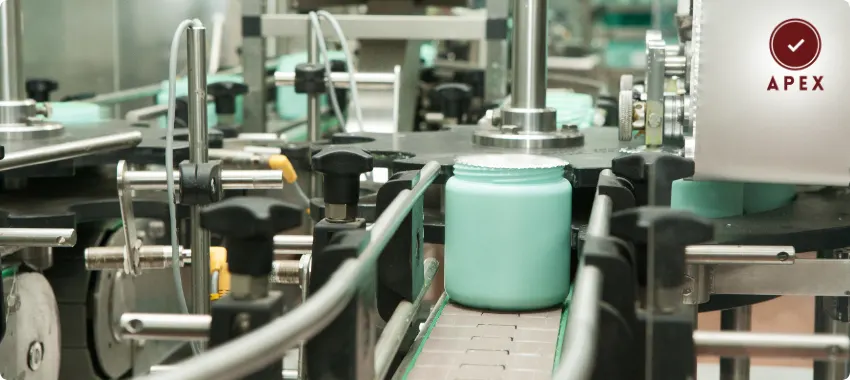
GMP ISO 22716 Certification in UAE is increasingly important for cosmetic manufacturers, private-label brand owners, contract filling and packing facilities, personal-care producers, and businesses that want a credible external review of their cosmetic Good Manufacturing Practices. In a market such as the UAE, where product quality, hygiene, traceability, brand reputation, retail expectations, and export confidence all carry commercial weight, certification against ISO 22716 helps organisations demonstrate that cosmetic manufacturing and related quality controls are being managed in a disciplined way.
For NORMEIRA, this service is positioned strictly around certification activity. The role of the certification body is to review the scope, examine the applicable GMP controls, plan and conduct the audit, assess conformity, evaluate findings, and make an independent certification decision when requirements are met. It is not presented as consultancy, implementation support, or training.
What GMP ISO 22716 certification means
ISO 22716 gives guidelines on Good Manufacturing Practices for cosmetic products. According to ISO, the standard covers the production, control, storage, and shipment of cosmetic products, while not serving as a full framework for research and development activities or the distribution of finished products. Its focus is therefore on the practical operating discipline needed to support consistent cosmetic quality and controlled manufacturing conditions.
Certification to ISO 22716 means an independent certification body has assessed whether the cosmetic GMP system and related operational controls conform to the applicable guideline requirements within the defined scope. During audit, attention is usually given to matters such as personnel responsibilities, premises, equipment, sanitation, raw-material control, production controls, documentation, deviation handling, complaints, recall readiness, and traceability.
Why GMP ISO 22716 certification matters in UAE
The UAE cosmetics and personal-care market is commercially active, brand sensitive, and closely linked to retail confidence, importer expectations, contract manufacturing quality, and market reputation. Businesses are often expected to show that cosmetic products are manufactured and controlled under disciplined conditions rather than informal routines. GMP ISO 22716 certification helps strengthen that position through an external and structured audit route.
This is particularly relevant where an organisation supplies to brand owners, distributors, pharmacies, beauty chains, hospitality channels, e-commerce operations, and regional export markets. A well-recognised GMP certification route can support customer confidence, stronger supplier evaluation outcomes, and more credible product-manufacturing claims.
Why organisations choose NORMEIRA for GMP ISO 22716 certification in UAE
Organisations seeking GMP ISO 22716 certification usually want a certification body that can review cosmetic operations professionally, understand the realities of manufacturing and packing environments, and conduct the assessment in a way that is disciplined, impartial, and commercially credible. They also want clarity on scope, audit planning, findings, certification decision-making, and continuing surveillance.
NORMEIRA positions GMP ISO 22716 certification in UAE as a structured certification route for organisations that need objective third-party review of cosmetic GMP controls. The emphasis is on proper application review, scope verification, audit execution, corrective-action closure, certification decision, and ongoing certification-cycle management.
Who commonly seeks GMP ISO 22716 certification in UAE
Demand for GMP ISO 22716 certification in UAE often comes from organisations involved in cosmetic production or closely related controlled activities. Typical applicants are businesses that need stronger external assurance for manufacturing quality and GMP discipline.
- Cosmetic manufacturers and private-label cosmetic producers
- Skin-care, hair-care, fragrance, and personal-care product manufacturers
- Contract manufacturers, fillers, packers, and labelling operations
- Cosmetic brands that want stronger third-party GMP assurance for supply partners
- Businesses preparing for retailer, distributor, importer, or export-market review
- Operations handling controlled cosmetic storage and shipment within the audited scope
How GMP ISO 22716 certification in UAE typically works
The certification path is normally structured in stages so the certification body can first understand the scope and operating context, and then evaluate whether the GMP controls are functioning in practice. The exact route depends on the nature of the cosmetic operation, the number of sites, outsourced processes, product categories, and the maturity of the documented GMP system.
| Step | Stage | What happens |
|---|---|---|
| 1 | Application and scope review | The organisation submits its application, identifies the cosmetic activities and site details, and defines the scope to be considered for certification. |
| 2 | Audit programme planning | Audit time, site coverage, product-process complexity, and auditor competence are determined according to the actual scope. |
| 3 | Readiness and document review | The GMP documentation and operating controls are reviewed to confirm that the site is ready for formal audit. |
| 4 | Site audit | Auditors assess implementation in practice through interviews, record sampling, site observation, and verification of GMP controls. |
| 5 | Findings and corrective action | Where nonconformities or gaps are raised, the organisation addresses them and submits objective evidence for review. |
| 6 | Technical review | The completed audit file and closure evidence are reviewed in line with certification-body requirements. |
| 7 | Certification decision | When requirements are met, an independent decision is taken and the certificate is approved for issuance. |
| 8 | Surveillance and renewal | Certification continues through periodic surveillance and later renewal to confirm continued conformity. |
What auditors usually review during GMP ISO 22716 certification
A GMP ISO 22716 audit is evidence-based. Auditors do not rely on a single manual or quality statement. They review whether the cosmetic GMP controls are defined, implemented, followed, and retained through objective records and practical operating discipline.
- Defined GMP responsibilities, organisation structure, and personnel hygiene controls
- Premises, housekeeping, sanitation, utilities, and environmental operating discipline
- Equipment suitability, maintenance, cleaning, and calibration where relevant
- Raw-material receipt, identification, status control, and storage practices
- Production and packing controls, batch traceability, line clearance, and in-process checks
- Documentation, records retention, version control, deviations, complaints, and recall readiness
- Handling of nonconforming product, corrective actions, and continuous GMP oversight
Benefits of GMP ISO 22716 certification in UAE
- Strengthens confidence in cosmetic manufacturing discipline and hygiene control
- Supports credibility with brand owners, distributors, and retail channels
- Improves consistency in production, documentation, and batch traceability
- Helps reduce avoidable GMP gaps that can affect quality and brand reputation
- Supports supplier-review, market-entry, and customer-assurance discussions
- Creates a more structured basis for ongoing GMP surveillance and improvement
GMP ISO 22716 certification timeline in UAE
There is no single fixed timeline for GMP ISO 22716 certification in UAE because project duration depends on the readiness of the cosmetic GMP system, site complexity, number of processes, outsourced activities, product categories, and the speed at which any findings are addressed. A single-site and well-prepared cosmetic operation can move more quickly than a business with multiple production stages, complex supplier controls, or weaker record discipline.
The most realistic timeline is always established after a review of the certification scope, operational activities, and current level of GMP readiness.
GMP ISO 22716 certification cost in UAE
Certification cost is determined by the real scope of activity rather than by a generic market claim. Key variables usually include site count, number of employees, complexity of production and packing operations, outsourced processes, product range, audit duration, and the maturity of the GMP controls being assessed.
A credible proposal is therefore based on scope review and audit-time determination, not on a flat figure that ignores operational reality.
If your organisation is looking for GMP ISO 22716 Certification in UAE, the most important step is to engage with a certification body that can evaluate cosmetic GMP controls in a structured and independent way. The value of the certificate depends on the quality of the audit process, the credibility of the issuing body, and the discipline of the certification decision behind it.
NORMEIRA provides GMP ISO 22716 certification in UAE as a non-accredited certification route for organisations that want a professional third-party review of cosmetic Good Manufacturing Practices. For cosmetic manufacturers, packers, fillers, and brand-linked operations, it can help demonstrate that GMP controls are being externally assessed against a recognised guideline framework.